
Pearls are the only gemstones in the world created by living organisms
Natural pearls are exceptionally rare—so rare that even seasoned collectors may never encounter a perfectly formed natural pearl in their lifetime.
Today, nearly all pearls on the market are cultured. These pearls still form naturally inside the mollusk, but the process begins when a small nucleus is intentionally placed inside the oyster. These are known as natural cultured pearls.
The market is also filled with imitation pearls, which are non-organic materials designed to mimic the appearance
of real pearls.
Distinguishing imitation pearls from genuine natural or cultured pearls is simple. However, identifying natural pearls from natural cultured pearls requires advanced gemological testing.
Types of Pearls
 |
Freshwater PearlsMost accessible and affordable. |
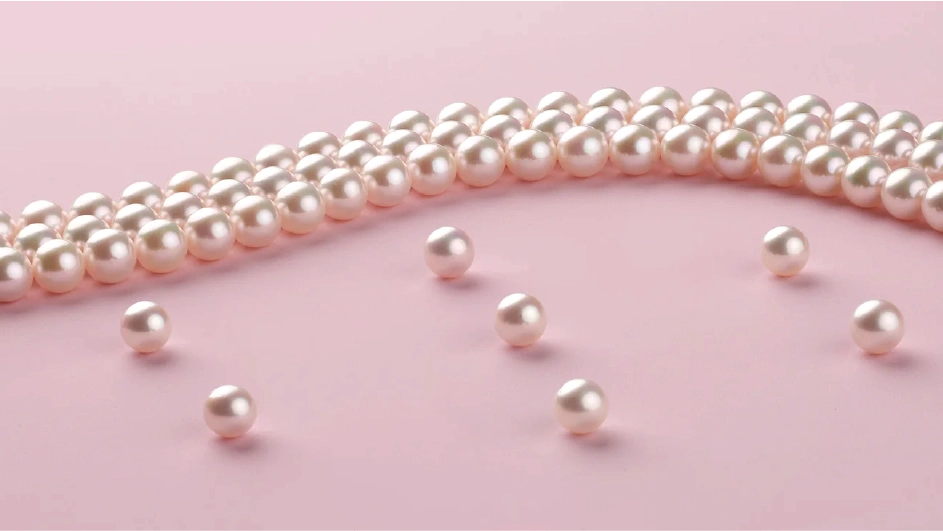
Akoya PearlsCultured in Japan from a unique species of saltwater oyster. |
 |
 |
South Sea PearlsKnown for the largest sizes among all pearl types. |
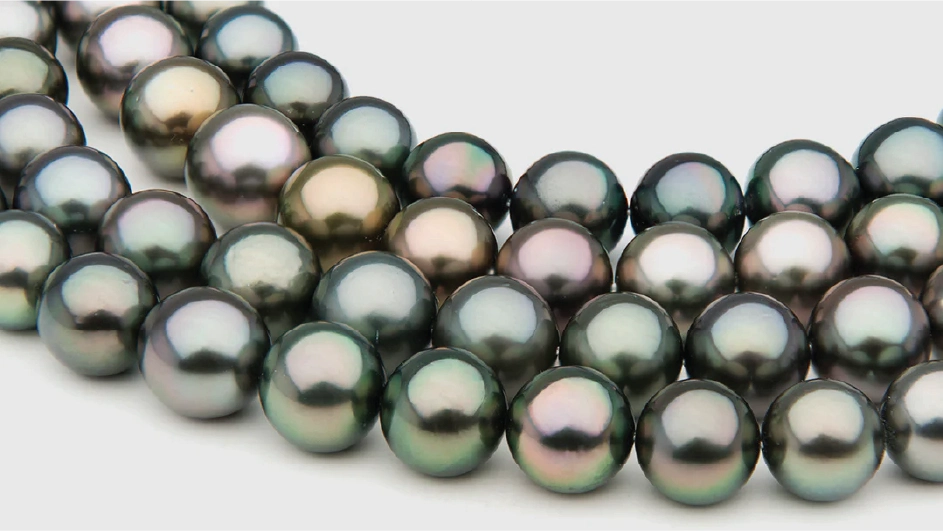
Black Tahitian PearlsProduced by a special black-lipped oyster found mainly in French Polynesia. |
 |
Pearl Grading
Pearl quality is assessed across five key criteria:
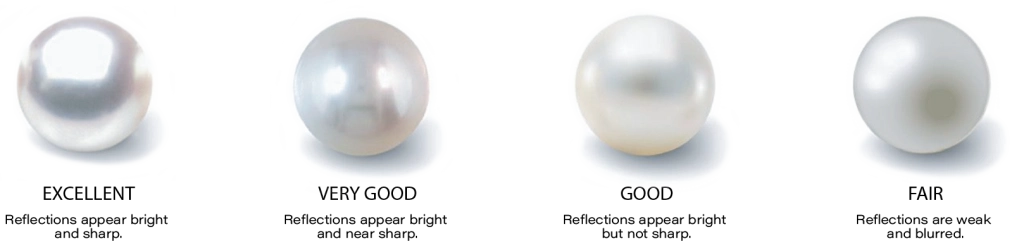
LUSTER
High-quality pearls show sharp, bright reflections.
SURFACE QUALITY
Fewer blemishes indicate higher grade.

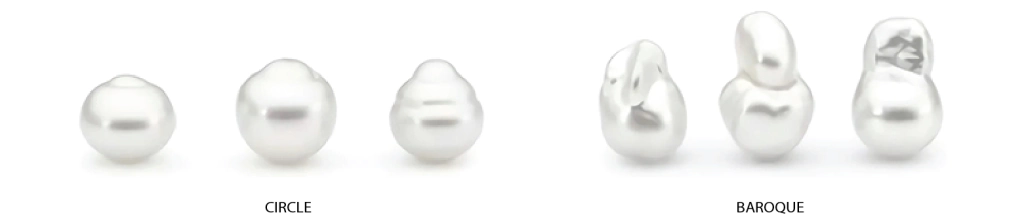
SHAPE
Perfectly round pearls are the rarest and most desirable, though symmetrical shapes are also sought after.

COLOR
While is classic, natural colors add depth and individuality.


NACRE THICKNESS
Thicker nacre indicates longer cultivation, resulting in better durability and value.
Typical size range: 2 mm to 16 mm.

Global Grading Systems
Hanadama Scale (Japan)

Tahitian System

Harmony Diamonds Standard
At Harmony Diamonds, we only source naturally cultivated saltwater pearls, in which we proudly adhere to the
Hanadama grading system and exclusively supply AAA-quality pearls — the highest standard of beauty, brilliance, and craftsmanship.